
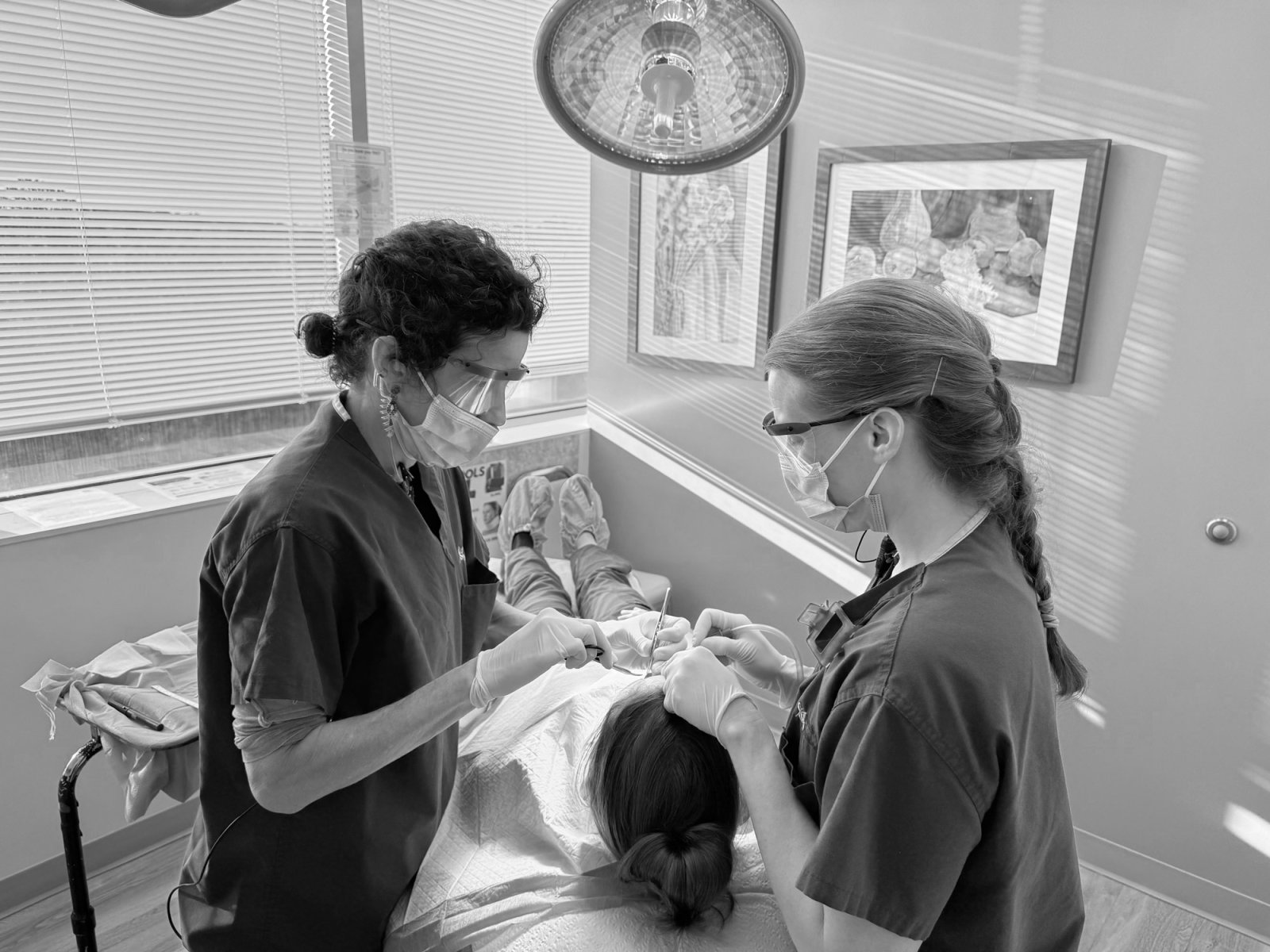
What is excision surgery?
Excision surgery removes a skin cancer or other growth along with a margin of healthy-looking skin around it, ensuring any cancer cells that have spread into the surrounding tissue are taken out. The procedure is performed under local anesthesia, so you remain awake and comfortable while the area is numb, and the wound is closed with stitches. Unlike Mohs surgery, where the margins are examined under the microscope during your visit, tissue removed by excision is sent to an outside lab for analysis.
Before your surgery
Fill out the excision surgery packet and bring it with you, along with a list of your medications and allergies and a photo of the surgical site taken on your phone. A photo is required. If you can’t take one, your dermatologist can identify and photograph the site for you.
Keep taking all prescribed medications, including blood thinners, but stop non-prescription aspirin, ibuprofen, and vitamin E if possible, and call us if you have a bleeding disorder, if the site is growing or changing quickly, or if you need special accommodations.
We require 48 hours’ notice to cancel or reschedule, and late cancellations and no-shows are charged a $500 fee.
On the day of surgery
Eat a light meal, shower the evening before or that morning, and don’t put makeup, creams, or lotions on the surgical area. Wear freshly laundered, loose clothing with a shirt that buttons up the front, and bring a sweater and something to occupy you, because your visit can last 2 to 3 hours. Please arrive on time, or we may need to reschedule you.
After your surgery
You will leave with stitches under a pressure bandage. Most stitches dissolve on their own, but you may need to return 7 to 10 days later to have them removed, so don’t plan an extended trip right after surgery. Go home and take it easy, and avoid strenuous activity for one week if the site is on your head or neck, or two weeks if it’s on your trunk, arms, or legs.
Questions about excision surgery
What patients most often ask us before their surgery.
Will it hurt?
When we start the procedure, you will be given local anesthesia with a very small needle. Although everyone’s tolerance for pain is different, patients who undergo an excision surgery find the procedure remarkably painless. We pride ourselves on being particularly gentle. You will be advised on the day of your procedure what can be taken for any discomfort you may experience.
Will there be a scar?
Yes. It is impossible to undergo surgery without having a scar. Nevertheless, it is our commitment that you will be completely satisfied with the cosmetic outcome. This means that, in some instances, it may take extra post-operative corrective procedures to attain the desired goal. We are committed to that process.
What will the scar look like?
Everybody heals at a different rate and the scar will look different over time. Initially, it will be red and bumpy, but eventually, the scar will be a barely visible “hair-thin” white line. We typically camouflage the scar in the lines of facial expression or in your natural skin folds.
How many stitches/sutures will I have?
The number of stitches that you need is determined by the type of closure that Dr. Nalovic performs, the location on your body, and the size of the suture material. Certain areas are under more tension and require more stitches to ensure the best cosmetic outcome, while other areas have less tension and therefore require fewer stitches. We use the smallest stitches possible to improve cosmetic results and shorten the time it takes to heal; that means that the number of stitches may be higher than if we used larger thread.
Will I need plastic surgery?
Dr. Nalovic performs the reconstructive surgery on site. Once your lesion has been successfully removed, Dr. Nalovic’s expertise lies in the reconstructive component of the surgery. If the lesion involves the eyelid margin, or if the reconstruction requires you to be put to sleep, Dr. Nalovic works closely with other specialists with whom we will coordinate your care.
Do I need to have the doctor look at the site before I have surgery?
Yes. Dr. Nalovic will examine the site and determine whether excision surgery is the right treatment for you before you undergo surgery. Because some of our patients are quite elderly or live far away, we usually schedule your consultation visit on the same day as the procedure.
Will I have a follow-up appointment with the physician?
Your follow-up status will be determined by Dr. Nalovic at the time your procedure is complete. If you do not receive a follow up appointment and we do not hear from you with post-operative concerns following your surgery, you will be given a follow-up phone call by our office approximately 8 weeks after surgery to evaluate your progress. Of course, you may call our office at any time you have any questions or concerns and we will see you that same day. This is what we call our “Open Door Policy.” Please do call us first as we want to make sure we have a room for you.
Can I postpone the surgery?
We do not recommend doing so. Your doctor has sent you here for us to remove your lesion and it should be addressed as soon as possible. It is important that you keep your appointment and not reschedule so as not to delay your treatment. Delaying surgery could allow your lesion to grow larger, making the reconstruction and your recovery more complicated.
What our patients say
“They are caring, pleasant, professional and knowledgeable. Dr. Nalovic leads a great team. Everyone was so kind & caring I was happy from the time I walked in to the time I left.”